Menu engineering is the savvy art and science of analyzing and designing a restaurant menu to maximize both dish popularity and profitability.
Welcome to eTakeawayMax’s definitive guide to menu engineering!
Ideally, we want every item on our menu to be a bestseller and profitable. However, some items simply don’t perform or earn well. Or both.
This is where menu engineering comes in to help us assess and fine-tune our menu.

In this guide, we’ll go over each step and cover key concepts:
- Fundamentals
- Menu analysis and cost calculation
- Four main categories of the menu engineering matrix
- Menu psychology and design
- Using technology and restaurant software
What is Menu Engineering?
Menu engineering is a system for evaluating each item on a menu, analyzing their profitability and popularity. Its primary goal is to increase a restaurant’s profits by adjusting and designing a menu based on dish pricing, performance and placement – with the help of psychology. Fortunately, this approach is beneficial not only to restaurants, but also to cafes, bars, food trucks, bakeries, online food deliveries, ghost kitchens, and everything in between.
The concept was first introduced and developed by Michael Kasavana and Donald Smith during their time as professors at Michigan State University School of Hospitality in the early 1980s. They published the first book on the subject in 1982.
Don’t worry about the fancy terms. It’s simply about finding out which dishes on a menu are popular and profitable, and grouping them into four categories (more on this later in this guide). Then, using menu psychology, we can design and adjust the dishes’ pricing and placement on the menu to help promote items that are less popular but profitable, and tweak those food choices that have higher costs. We’ll cover more of these below.
How does menu engineering work?

The process starts with menu analysis. Each menu item is evaluated in terms of its food costs, contribution margin, price, and sales data.
Based on the calculated data, we will categorize them into four groups using a matrix, which will help us determine those delicious options that are profitable and popular. The matrix will also help us identify those dishes with low contribution margins and those that aren’t favored by diners.
Next, with menu psychology, we can leverage common techniques and human behavior to re-design our menu. Strategic placements, layouts, colors, price formatting, and compelling descriptions can highlight dishes that need the extra boost.
Of course, we can also implement other strategies, such as tweaking portion sizes and sourcing ingredients as a practical approach to improve profitability while maintaining quality. Finally, we always have the option to reinvent or remove a menu item if necessary.
Are you ready to get started? Continue reading and let’s crunch some numbers!
Analyze menu items
We need to gather data and crunch some numbers first. But don’t worry, you can use our free Menu Engineering Worksheet. We’ll go through each process step by step.
First things first: Decide how often we will conduct menu engineering analysis. It can be monthly, quarterly, or even yearly. Whichever we choose, stick to that timeframe.
What information do we need for menu analysis?
- Menu item food cost
- Overall food cost percentage (in a given period)
- Menu item food cost percentage
- Total contribution margin
- Menu item contribution margin (per portion/serving)
- Menu item price
- Number of sales for each menu item
- Total number of sales for all menu items
- Total sales amount for each menu item
- Overall restaurant sales amount (sales for all menu items)
Depending on the timeframe that we select, we need to gather the data based on that period. For example, if we want to analyze monthly menu performance, we’ll get the numbers from the past month (and each previous month if we want to look back further).
Back in the day, collecting this data required a lot of manual effort when tracking the numbers by pen and paper. But nowadays, POS and restaurant management software can track these automatically for us.
How to calculate menu item food cost?
Food cost is simply how much money is spent on the ingredients for every dish – a crucial metric. However, calculating the food cost for each unit can be quite meticulous when dealing with portioning multiple ingredients.
A straightforward approach is to sum up the total cost of a full batch of food, such as a tray of baked lasagna, and divide it by the number of portions the batch yields.
PRO TIP:
Remember to include the cost of purchasing, delivery fees, or other costs incurred while buying or sourcing the ingredients.
Don’t forget about the costs of condiments and sauces too!
Traditional menu engineering does not also include labor costs and other fees. However, other models have explored to include labor costs as well.
We can also take this into account.
As an example, if the cost is \$20 to make a tray of lasagna (adding up all the required ingredient expenses), and it yields 8 portions:
\$20 divided by 8 portions = \$2.5 per portion
The menu item food cost for 1 serving of baked lasagna is \$2.50.
There are times where we will need to get into the tiny numbers. For example, on a breakfast plate, we need to get the cost of a single bacon, an egg and a slice of bread. In any case, when we purchase ingredients in bulk, we can simply divide the total cost by the number of items in that bulk:
A tray of dozen eggs worth \$4 divided by 12 = 0.33 cents per egg
To summarize, the formula for menu item food cost:

How to calculate food cost percentage?
Food cost percentage is the ratio of overall costs of food (and beverage) items and overall sales amount in a given time period. This can be measured weekly, monthly, quarterly, or even yearly.
Let’s say for the past week, a restaurant made \$9000 as total sales revenue. The restaurant’s overall food cost amounts to \$3,200. Given the formula, we can find the restaurant’s food cost percentage for the past week:
( \$3200 divided by \$9000 ) x 100 = 36 % (for the past week)

For calculating the food cost percentage of a menu item:
(menu item food cost ÷ menu price sales) x 100
Most restaurants and businesses in the industry typically target a food cost percentage ranging from 28 and 35% as a general guideline. However, each restaurant may have its own unique cases depending on the type of food, restaurant concept, and local area.
How to calculate contribution margin?
Simply put, it’s the net amount of money we take to the bank after we subtract the food cost.
Contribution margin is the pillar of menu engineering. This metric is an effective way of measuring profit because it tells us how much earnings each menu item brings in.
It can be calculated for each item’s portion, or as the overall profit from the sales of a food item over a given period.
Contribution Margin Per Portion:
menu item sale price – menu item food cost
Total Contribution Margin Per Menu Item:
total sales revenue of item* – total food cost of menu item sold*
*Make sure that contribution margin is always calculated for a specific period.
For example, if a burger is sold for \$5 and costs \$2 to make, the contribution margin per portion is \$3.
And if we sell 1000 burgers in a week, we’d get \$5000 in total sales, minus the total food cost to make them (\$2000) = the total contribution margin for the week is \$3000.
Which menu items are bestsellers?
Next, we need to identify which items on our menu are popular among diners. We can take a look at our restaurant sales records and see how many of each menu item was sold over a specific time frame.
Again, POS software should have this information readily available. We can simply check the sales report and look at the quantity of each menu item sold (we can also use filters to select a given period or go through sales categories).
For each menu item, be sure to gather how many “units” or quantities are sold (not the sales amount) during the selected time frame. We will be able to rank them and identify those that sell well and those that are in low demand.
Also, we can ask our team (both the front-of-house staff and the kitchen crew) which food options are favorites among diners. This anecdotal information can be very useful and serves as a good complement to our data.
Food cost percentage vs Contribution margin
- Food Cost Percentage tells us what portion of the selling price is spent on ingredients. This metric can help us determine factors on how to save money on costs.
- Contribution Margin tells us how much profit is remaining after deducting food expenses. This metric can help us identify factors on how to make more money.
As an example, let’s say we have two menu items: a surf-and-turf platter (steak + lobster) and a veggie burger:
| The surf and turf platter: Priced at \$30 Costs \$15 to make | The veggie burger: Priced at \$7 Costs \$3 to make |
| Food cost percentage = 50% Contribution margin = \$15 | Food cost percentage = 43% Contribution margin = \$5 |
While the surf-and-turf platter has a higher food cost percentage, it actually generates more profit (contribution margin) compared to the veggie burger. Higher food costs don’t always mean lower profits.
Now we have all our data on hand…
FREE Menu Engineering Toolkit: Your Complete Solution for Menu Profitability

Transform Your Menu into a Profit-Generating Machine!
Stop guessing which menu items are making (or costing) you money. Get instant access to our FREE Menu Engineering Toolkit:
✓ Interactive Menu Engineering Worksheet
✓ Menu Action Plan PDF
✓ Menu Engineering Matrix
eTakeawayMax’s Free Menu Engineering Worksheet
- Plug in your numbers, and watch the magic happen!
- Automatic calculations of profit margins, food cost percentage, item performance and more. No complex formulas to figure out – it’s all automated.
Create a copy of the spreadsheet and use it to fill in the data. Follow along the instructions included and the worksheet will automatically do the calculations for you. Feel free to create separate sheets for monthly reports or for each section of your menu (appetizers, mains, desserts, etc). Use it any way you wish.
Enter the restaurant name, and the date of period covered (week date or month date, etc)
For each menu item, fill in the data for:
- Menu Item Name
- Number Sold
- Item Food Cost
- Item Sell Price
When examined these metrics together, they can help us make important decisions and guide our menu analysis. Next up, we’ll group our menu items into the four categories: stars, puzzles, plow horses, and dogs.
Categorize menu items

By now, we have gathered and computed our data. Based on each menu item’s popularity and profitability, we can group them into four categories:
- Stars – high popularity and high profitability
- Puzzles – low popularity and high profitability
- Plow horses – high popularity and low profitability
- Dogs – low popularity and low profitability
Stars
Stars are the most popular and profitable items on our menu. Customers love ordering them, and they are inexpensive to make. Since they’re performing well, it’s wise to keep them just as they are.
What to do with “Stars”:
- Continue to promote them in every way – website, social media, emails, etc.
Place them prominently on the menu to draw special attention (more on menu design and placement later).
Puzzles
Puzzles are also profitable, but they don’t sell quite well with customers. Since they have the potential to make profit, they’re still valuable. It’s important to promote and feature them more on the menu.
Here are some ways to turn “puzzles” into “stars”:
- Improve their descriptions on the menu. Words are powerful. Add flavor profiles. Add details that appeal to all senses – describing not only the taste, but also the aroma, texture, presentation, and even the sound of a dish. For example, “Crispy-skinned duck confit: Infused with garlic and thyme; sizzling, tender meat with a satisfying crunch; with a drizzle of cherry reduction”. Or humanize it and make it home-y: “Grandmother’s chunky chocolate chip cookies, fresh from the oven”
- Adjust the price. Maybe it’s priced higher than other menu items. Or customers might find it more expensive compared with other similar restaurants. In any case, investigate and adjust the price accordingly while keeping the food cost percentage low.
- Change the item’s presentation or taste. Add a special sauce or change the batter to make it crispier. Serve the dish on a stylish plate. Updating the taste and/or presentation can help draw interest and attention from customers. Make the plating more “Instagrammable” for diners who love food photography. But be sure to make changes one at a time so we can keep track of each factor that worked well.
- Create specials and offerings. Host a “Seafood Sunday” to help promote some fish and seafood choices. Or a daily special featuring one of the “puzzle” dishes.
- Place them strategically on the menu. Make sure they are noticeable. Showcase where people can see them right away. We’ll discuss more about menu psychology and design later.
- Promote the puzzles. Tell the staff to recommend these items. Feature them more on social media.
Plow horses
Plow horses are bestsellers, but they don’t make much profit. It’s good news that these items are already selling well. We just need to make them profitable.
Here are some ways to increase profit:
- Negotiate better prices with vendors. Decrease food cost by sourcing lower-cost ingredients. It’s important to note that “lower cost” does not mean poorer quality. It’s best to keep the same food quality while negotiating lower prices when we order in bulk. If our current vendors and food partners are not willing to bargain, we can consider shopping around and propose new bids. Using inventory data can be beneficial in this situation to track previous purchase data.
- Adjust portion sizes. In many cases, diners are leaving behind half a plateful of certain dishes if the serving size is too big. Analyze and reduce portion sizes slightly. This will help reduce food waste too. Be careful, though. With too much reduction, guests will notice and might stop ordering them for the same price.
- Strategic pairing. Most things go better with a drink. Host a “Wine & Dine Wednesdays” where we can pair “puzzle” entrees with wine at a discounted price. Or add “combo” choices on the menu where certain appetizers or entrees are paired with a drink or sides. Pair plow horses with another item that has higher profit margin.
Dogs
“Dogs” take up valuable space on a menu. They have high food costs, and no one is ordering them. These items can distract guests from our stars and puzzles.
What to do with “Dogs”:
- Reinvent / rebrand the dish. Naming the item “Royal Beluga Caviar” instead of Fish eggs sounds more delicious. This is just a basic example, but for any food item, we can rebrand and reinvent it with a strong name and adding a few low-cost ingredients, sauces, or side dishes that have high flavor.
- Limited-time offers. Try offering the dish as a special once a week or create monthly specials. Limited-time offers spur urgency to encourage diners to order the item. As a cherry on top, we only need to buy enough of the ingredients for the dish during the offer period. This will decrease food costs.
- Remove it. Ideally, we want the dish to increase in popularity (promote “dogs” to “plow horses”). Or try to lower the food cost (promote to “puzzles”). If none of the strategies work, we can remove the item from the menu as a last resort.
Reviewing the matrix
Now that we’ve categorized our menu items into stars, puzzles, plow horses, dogs, we can implement the steps we’ve discussed to improve the popularity and profitability of our dishes. Additionally, we can also create a matrix for each menu category for a deeper dive.
To recap, here are the factors we can look into as we improve our menu:
- Adjust prices
- Change portion sizes
- Negotiate with vendors and source lower-cost ingredients
- Create specials and limited-time offers
- Pair items together and create “combo” dishes
- Promote on social media and other kinds of marketing
- Tell staff to recommend items to customers
- Reinvent a dish by rebranding, updating the presentation, or adding more flavors
- Remove “dogs” as a last resort when none of the strategies work
And last, but not the least:
- Highlight items on the menu with strategic placement and design
We’ll cover this more in depth in the next section, as we go over menu psychology and design.
Design and optimize our menu
Of course, we want our menu to look great. We want it to properly represent our restaurant’s brand. But more than that, the design should factor in how the human brain perceives layout, presentation, and all the other different elements of a menu. Importantly, it should reflect the results of our menu analysis.
We’ll go over the most effective concepts in menu psychology and tried-and-tested design techniques.

- Click the image to view the full infographic on Menu Psychology
Limit our menu choices.
Too many choices often lead to indecision. Diners take longer to place their orders and slow down table turnaround time. As much as we can, we want to serve as many guests as possible during each service period to increase sales.
Menus overloaded with many options can have more drawbacks than be beneficial when it comes to selling our dishes. This is known as the paradox of choice. Make it easier for customers to scan through a menu by offering up to seven options for each category: appetizers, mains, salads, sides, etc.
Moreover, having similar food items within a category can create unnecessary competition. Offering two choices of beef stew is ineffective. Create one outstanding beef stew entrée and remove the competition.
Prioritize important items when listing each menu section’s items.
Order matters. When listing out menu items vertically, the top ones get more attention. As a customer goes down the list, the items at the bottom often get overlooked. We can leverage this to emphasize the dishes we want guests to choose. Need a “puzzle” item to sell more? We can feature it higher up on the list.
Keep pricing format simple.
We associate dollar signs (\$) with payment and money. No matter the currency, adding the symbol makes items seem more expensive. Consider how we format and present our prices can affect customer perception.
Which seems more expensive?
| Tuna Sashimi … \$5.00 | Tuna Sashimi 5 |
Keep the formatting of prices as simple as possible. Don’t highlight it with bolder texts or other colors, or anything that draws attention. Minimizing attention to prices will help customers focus on the dishes.
“The dollar sign is a pain point that reminds the diner that they are spending money,”
– Aaron Allen, a global restaurant consultant and expert on the psychology of menu design
Placing them in another column is not ideal as well. Like the first “Tuna sashimi” example above, adding decimals may come across as pretentious (unless we are going for a classic fine dining vibe).
Prices ending in .99 work better in supermarkets or department stores. For most menus, it’s not necessary unless the restaurant’s selling point is cheap food. It makes sense to price a fast-food burger for \$3.99. But on the other hand, a premium roast duck should be priced as \$50 or 50, instead of \$49.99.
Use decoys.
Speaking of expensive prices, we can use it to our advantage by creating menu decoys. Add another expensive “luxury” dish near the top of the menu, and everything else on the menu seems reasonably priced. Compared to a \$350 wagyu steak, a \$100 lobster dinner looks like a pretty good deal.
Follow eye movement patterns.
Strategic places where people typically focus on menus at first glance:
- the top of the page
- the top right hand corner
- First item on the page
- Top left (reading it like a book)
In many cases, people also rely on the Golden Triangle, which sets the eyes to look at the center, then the top right, and the top left.

For menus with different number of panels (or pages), here are the areas that people’s eyes tend to focus on:

Follow these eye movement patterns. After all, a menu is the “property” where our dishes live. And these areas of focus serve as prime real estate to showcase food choices that give us the most profit.
Write powerful descriptions.
We previously talked about enhancing the descriptions for each menu item. But words can greatly affect and influence people. In a field study conducted by Professor Brian Wansink and his team from the Cornell University Food and Brand Lab, menu items with descriptive labels sold 27% higher than items without descriptive labels.
Adding different types of descriptors can elevate a dish:
- Sensory descriptors: crispy, succulent, satin, tender, crunchy
- Cultural or geographic terms: Cajun, Italian, Belgian,
- Nostalgic descriptions: homestyle, traditional, and “Grandma’s”
- Culinary descriptors: stir-fried, wok-tossed, pan-seared, five-spice
Effective descriptions showcase the quality and care that goes into each menu item. Make sure to have a good balance of being descriptive without being too heavy, fluffy, or flowery.
Want your menu rewritten with evocative words?
Stop settling for bland menu descriptions that put your dishes to sleep. Let us bring your menu to life – absolutely free! Studies show that well-written menu descriptions can increase sales by up to 27%. Every dish tells a story. Don’t let bland descriptions undersell your amazing food. Give your menu the voice it deserves.
Just submit your menu and we’ll get back to you.
Transform Your Menu into a Mouthwatering Masterpiece!
- Strategic word choices that boost sales
- Evocative, sensory-rich descriptions
- Appetite-triggering language
Examples:
Before: Beef Burger with Fries
After: Hand-pressed Angus Beef Burger, crowned with melted aged cheddar on a toasted brioche bun, served with golden, crispy hand-cut fries.
Include stamps of approval and testimonials.
“I’ll have what they’re having”
People tend to follow what others are doing, especially those who they like or trust. This is known as social proof.
Include a quote or testimonial from a customer, a family member, or even the chef. It’s a bigger win to get a stamp of approval from a celebrity or influencer.
Another option would be to create a “Staff Favorites” section or “Fan Favorites” and call out a few of our most delicious and profitable items loved by our staff and customers.
Common menu design techniques

Keep it simple and use a lot of white space.
Keep the font size, paper color, and font style simple; don’t overcomplicate it. Use white space to declutter our menu with too many items or too many unnecessary details. Have a good balance, though. If we need to fill in space, add photos or restaurant details such as website, address, social media links, and contact information.
Use visual cues.
Highlight the items we want to sell most using various types of graphics, symbols, layout, or colors. Add an item inside a box. Or add a brand logo next to a dish. Make it stand out. You can also use arrows or other graphics to guide the customer and lead the way to the dishes we want to promote. Don’t go overboard, though. If every item on the menu is highlighted with special visuals, nothing will stand out. Showcase one item per category at most, as good practice.
Add customization.
Use the menu to upsell certain items. List available add-ons and modifications. It will also provide a better customer experience if they can customize their food choices.
Use high quality food photography.
No images are better than low-quality photos. A well-taken photo alongside a food item increases sales. Great images can also help inform guests about dishes they are not familiar with. However, it’s less common to see photos printed on menus these days, as printing is expensive, and online menus are easily accessible. Photographs on a menu also tend to cheapen the entire menu concept, so it‘s better to avoid this for a high-end restaurant. At best, don’t over-do photography on a physical menu. Use it to highlight selected items.
Let’s take a look at this sample menu

As we can see, this menu follows many of the best design practices:
- Uses enough whitespace.
- Clean and simple design. One style of font is utilized. Use of color is not too much – specifically, the color orange stimulates appetite and slightly used to highlight certain food items.
- Pricing format is simple, and dollar signs are removed.
- Use of a box and graphics as visual cues to highlight certain dishes.
- Selected items are placed strategically at the center, following the “Golden Triangle”.
- Proper use of descriptions (sensory, nostalgic, culinary, and cultural).
- Use of decoy items (Lobster Thermidor).
Creating an online menu that sells
The restaurant and hospitality industry has seen significant growth in the digital space, particularly with the rise of food delivery apps. Aside from having a website and social media presence, it’s now essential to have a well-designed online menu that represents our restaurant across different platforms. Careful planning is necessary to ensure that our branding and style remain consistent while strategically highlighting our menu items, whether on a physical or online menu.
Here are some important factors to consider:
1. Be descriptive.
Guests ordering online will not have the pleasure of interacting with your servers, so they won’t have the opportunity to ask any questions about your menu items. Take time to write and describe every dish – use sensory, cultural, nostalgic, and culinary descriptors to add extra dimensions.
2. Food photos are a must.
In this case, food photos are a requirement for online menus. Photos have a dedicated space on websites and mobile apps. Users appreciate looking at photos as they browse through a menu. Remember to upload high-quality photos. If not available, it’s better not to include images.
3. Offer add-ons and modifications.
Food delivery apps have made it easy for customers to customize their orders. And most people are customizing their online orders. Whether you’re taking online orders from your website or another third-party platform, use this as an advantage to upsell certain items and offer customization. It will provide a much better customer experience.
4. Take advantage of food delivery app “modules”.
Some third-party delivery platforms feature sections on “People Also Ordered” and “Popular Items”. Keep an eye on them to make sure your items are optimized (e.g. have good photos and descriptions). This is where our stars can shine even brighter.
Whether we choose to use our own website or a third-party app, make sure that our branding stays consistent for every platform, including social media. Food delivery apps usually allow some level of customization, such as adding profile photos and customizing a profile’s color.
But branding goes beyond our logos and design. It’s also integrated with our style of service. So, whether we’re serving food at a table or delivering an online order, make sure the food and experience we are serving are fresh and consistent. That’s what people will remember.
Design as a menu strategy
By now, we have designed our menu to highlight our menu items in strategic places based on eye movement patterns and visual cues. The important thing is to design a menu with all senses in mind.
For physical menus, this means choosing font sizes and colors that are easy for everyone to read and opting for durable or laminated materials that can withstand wear and tear. Consider the menu size as well – not too large, not too small. For online menus, be sure to also include allergy information and other dietary needs.
Be accessible to all guests. Create menus for customers that have needs and visual impairment, so our restaurant can offer the best experience for everybody.

eTakeawayMax’s MENU TEMPLATES PACK
Instantly Elevate Your Menu’s Look with Our FREE Premium Menu Templates!
Stop struggling with menu design. Get started creating awesome menus with our free menu templates:
✓ Professional Canva Templates with professional typography and design elements. Easy-to-update price lists and descriptions.
✓ Ready-to-Use PNG Files (packaged as a ZIP file).
✓ Different styles for different restaurant concepts.
Keeping track
Now that we’ve taken steps to improve our dishes and design our menu, it’s important to conduct regular menu reviews (weekly, monthly, or quarterly). Here are some important metrics to keep track of:
- Contribution margin
- Food cost percentage
- Sales volume – tracks the number of units sold for each item over a specific period.
It’s also best to get customer feedback and conduct reviews of inventory. A high inventory turnover rate indicates effective sales of menu items, reducing waste and ensuring fresh ingredients are used.
Continue to test and iterate by adjusting one factor at a time to track which changes are performing well.
Using Technology in Menu Engineering
To make our lives easier, let’s power up our restaurant with software and tools. Especially when doing menu analysis, calculations, and keeping track of sales and inventory, these must-have restaurant tools are helpful.
- Point of Sale (POS) System
- Online Ordering Platform
- Restaurant Inventory Management System
Point of Sale (POS) System
This is our hub for all of our restaurant’s transactions. Use it to input and process orders, payments, keep track of inventory, view sales reports, maintain proper accounting and more.
Online Ordering Platform
Choose whether to use a third-party food delivery app or a personal website. Or both. The important thing is to create and design a great menu experience, especially when it’s online.
- Learn more how to build your own delivery app.
Restaurant Inventory Management System
Inventory software can help us keep track of ingredients, vendor orders, and manage food waste and costs.
Free menu design tools
- Design & print restaurant & takeout menus online with Canva
- Free QR online menu generator with QR MENU
Takeaways
Menu engineering is essential for maximizing a restaurant’s earnings and improving customer satisfaction.
Key benefits:
- Increase profits
- Manage costs
- Improve customer experience
- Reduce food waste and manage inventory
That’s it, we made it through to the end of this guide and created a better menu! Which strategy from this guide is helpful?

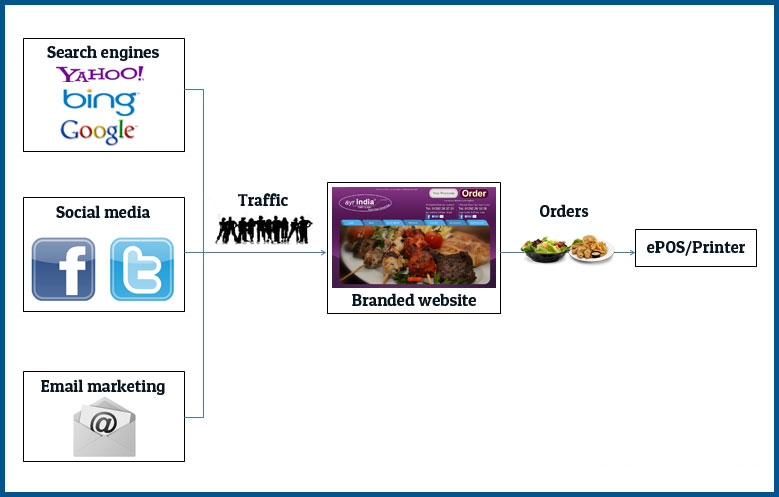
Get a unique, branded website + online menu that showcases your restaurant.
Disclaimer:
This information is provided for general informational purposes only and does not constitute an endorsement. eTakeawayMax.co.uk does not warrant the accuracy or completeness of any information, text, graphics, links, or other media contained within this content. eTakeawayMax.co.uk does not guarantee any specific results if you follow any advice herein. Please consult with a professional such as a lawyer, accountant, or business advisor for advice specific to your situation.